

The risk of several eye conditions increases with age, which makes regular eye care more important for older adults. A 2026 study of adults aged 50 and above in an Indian eye-care catchment area found that 29.5% had visual impairment and 2.2% were blind. The same study found that untreated cataracts caused 76.5% of blindness among the people surveyed.
This is why elderly eye care deserves regular attention. Simple steps such as routine eye check-ups, good lighting, healthy food, and early attention to changes in eyesight can help seniors stay safe, active, and independent for longer.
Why Eye Health Matters More With Age
As people get older, the risk of conditions such as cataracts, glaucoma, macular degeneration, diabetic eye disease, and dry eyes can increase. Some of these problems develop slowly, so seniors may not notice them in the early stages.
Regular eye check-ups can help find these problems before they become more serious. This is especially important for seniors who have diabetes, high blood pressure, or an existing eye condition.
Schedule Regular Eye Check-Ups
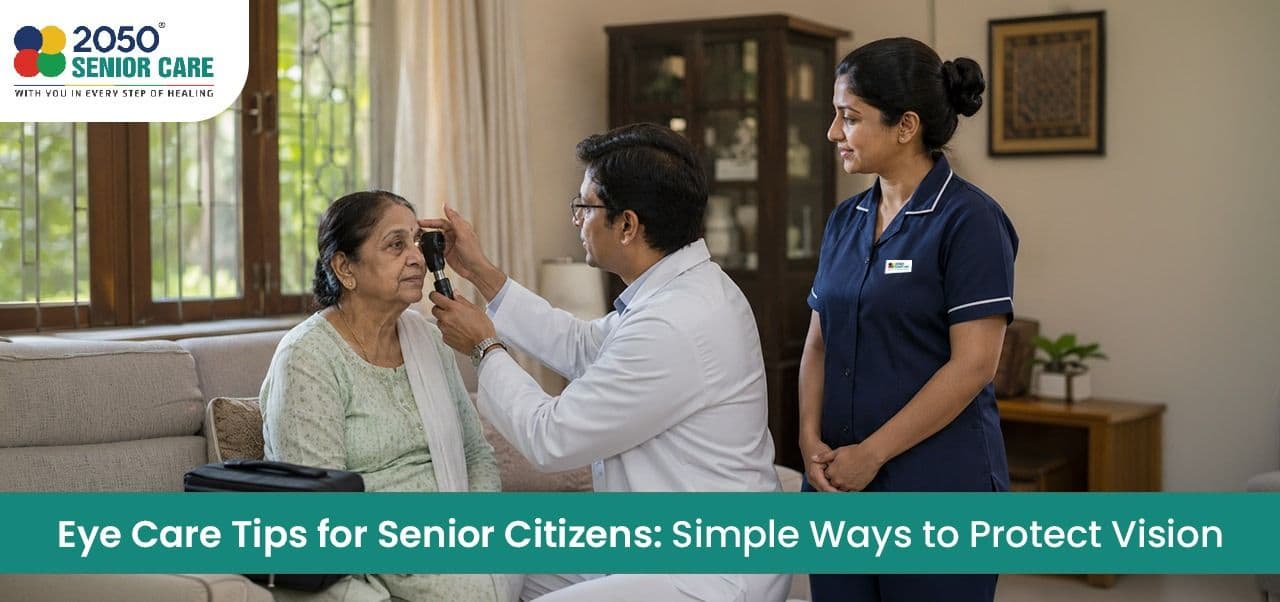
An eye examination is one of the simplest ways to protect eyesight. An eye doctor can check how clearly a senior can see and look for changes in different parts of the eye.
Family members can help by booking appointments, arranging travel, and making sure follow-up visits are not missed. Seniors with ongoing health conditions may need eye check-ups more often based on their doctor’s advice.
Know the Common Signs of Cataracts
Cataracts happen when the clear lens of the eye becomes cloudy. They are common in older adults and usually develop slowly over time.
Common cataract symptoms in elderly adults include:
- Blurry or cloudy vision
- Trouble seeing at night
- Sensitivity to bright light
- Glare from headlights
- Colours looking faded
- Needing brighter light for reading
- Seeing halos around lights
- Double vision in one eye
These signs should not be ignored. If a senior notices any of these changes, it is best to speak with an eye specialist.
Watch for Other Vision Changes
Cataracts are not the only eye problem seniors may face. Glaucoma, macular degeneration, diabetic retinopathy, dry eyes, and changes in reading vision can also affect older adults.
Some vision problems in seniors may not cause pain or clear warning signs at first. Regular check-ups are important if a senior starts having trouble reading, recognising faces, walking comfortably, or seeing clearly in low light.
Manage Diabetes and Blood Pressure
Diabetes and high blood pressure can affect the small blood vessels in the eyes. Over time, this may increase the risk of eye damage and vision loss.
Seniors should take their medicines on time and follow their doctor’s advice for managing blood sugar, blood pressure, and cholesterol. Good control of these conditions can support both eye health and overall health.
Keep the Home Bright and Safe
Older adults often need more light for reading, cooking, walking, and other daily tasks. Important areas such as bedrooms, bathrooms, kitchens, stairways, and hallways should be well lit.
Families can make the home safer by:
- Adding brighter lights in dark areas
- Using night lights in bedrooms and hallways
- Removing loose rugs and clutter
- Keeping stairs clear
- Placing glasses and daily-use items within easy reach
These small changes can make daily life easier and may also reduce the risk of trips and falls.
Eat a Healthy and Balanced Diet
A balanced diet supports the whole body, including the eyes. Seniors should try to include fruits, vegetables, leafy greens, whole grains, eggs, pulses, and healthy sources of protein in their meals.
Food alone cannot treat an eye condition, but good nutrition can support healthy ageing. Seniors with diabetes, kidney problems, or other health conditions should follow the diet recommended by their doctor or dietitian.
Protect the Eyes From Strong Sunlight
Long-term exposure to ultraviolet light can affect eye health. Wearing good-quality sunglasses with UV protection can help protect the eyes when seniors spend time outdoors.
A wide-brimmed hat can also provide extra shade. This is a simple habit that can be added to daily routines, especially for seniors who enjoy walking, gardening, or spending time outside.
Keep Glasses Clean and Updated
Wearing the right glasses can make reading, walking, and everyday tasks much easier. Seniors should get their prescription checked if they notice changes in their eyesight.
Glasses should also be kept clean and stored in a safe, easy-to-find place. If a senior uses different glasses for reading and distance, keeping them in separate places can help avoid confusion.
Do Not Ignore Sudden Vision Changes
Some eye problems need quick medical attention. Sudden loss of vision, severe eye pain, flashes of light, a sudden increase in floaters, double vision, or a dark shadow across the field of vision should not be ignored.
These symptoms may be more serious than normal age-related changes. Families should seek medical help promptly instead of waiting for the problem to improve on its own.
How Families Can Help
Family members often notice small changes before seniors do. A parent who stops reading, avoids stairs, sits closer to the television, or becomes uncomfortable going out at night may be having trouble with their eyesight.
Simple support can make a big difference. Helping with appointments, medicines, lighting, glasses, and regular health checks can make eye care easier and help seniors feel more confident.
The Bottom Line
Good senior eye health can help older adults stay safe, active, and independent. Regular eye check-ups, proper lighting, healthy food, and updated glasses can all support better vision in daily life.
At 2050 Senior Care, the focus is on helping seniors live with comfort, dignity, and the right support. By noticing vision changes early and encouraging timely medical care, families and caregivers can help make everyday life safer, easier, and more comfortable for seniors.
Frequently Asked Questions
1. How often should senior citizens get their eyes checked?
Most seniors should have regular eye examinations based on their doctor’s advice. Those with diabetes, high blood pressure, or an existing eye condition may need check-ups more often.
2. What are the common cataract symptoms in elderly adults?
Common signs include blurry vision, difficulty seeing at night, glare from lights, faded colours, and needing brighter light for reading. These changes should be checked by an eye specialist.
3. What are the most common vision problems in seniors?
Common problems include cataracts, glaucoma, macular degeneration, diabetic eye disease, dry eyes, and changes in reading or distance vision.
4. Can diet help support senior eye health?
A balanced diet with fruits, vegetables, leafy greens, whole grains, eggs, pulses, and healthy sources of protein can support overall eye health. However, food cannot treat an existing eye condition.
5. When should sudden vision changes be treated as urgent?
Sudden loss of vision, severe eye pain, flashes of light, many new floaters, double vision, or a dark shadow across the field of vision should be checked by a healthcare professional promptly.