


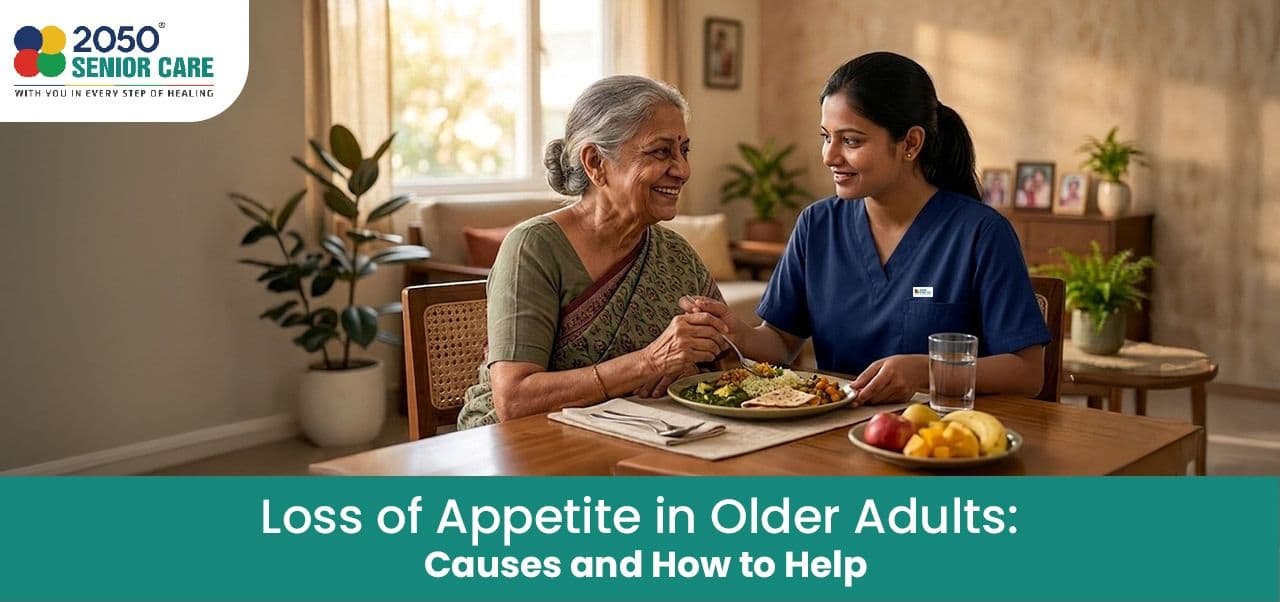
A reduced appetite in later life is not always simply a sign of ageing. An older adult may start leaving food unfinished, skipping meals, eating only a few bites, or saying that familiar foods no longer taste or smell appealing. These changes can be linked to medicines, dental discomfort, constipation, difficulty swallowing, mood changes or an underlying health problem. When such changes continue, timely attention through appropriate geriatric care services can help identify what is affecting the person’s eating pattern.
Families may first notice the problem when a parent who once enjoyed breakfast begins refusing it, or when dinner portions become noticeably smaller day after day. Instead of forcing food, it is important to understand why eating has become difficult and make meals easier, more comfortable and more appealing. Keeping track of reduced food intake, weight changes and other symptoms can also help families respond appropriately. For additional guidance and senior-focused support, families can explore 2050 Senior Care and understand the care options available for older adults.
Common Reasons Older Adults May Lose Their Appetite
Appetite changes in older adults can develop gradually, making them easy to overlook at home. Understanding the underlying reason is important because persistent poor eating can affect strength, energy, recovery, and day-to-day independence. These elderly lifestyle tips can help families recognise changes early and respond more appropriately.
- Changes in Taste and Smell: According to the National Council on Ageing, ageing can reduce sensitivity to flavours and aromas, making familiar meals seem bland or unappealing.
- Medication Side Effects: Some medicines may cause nausea, dry mouth, constipation, altered taste or reduced hunger, discouraging regular meals.
- Dental Problems or Mouth Pain: Loose teeth, poorly fitting dentures, gum problems, or mouth sores can make chewing uncomfortable and lead to smaller meals.
- Difficulty Swallowing: Trouble swallowing food or liquids may make meals stressful, especially when an older adult fears coughing, choking or discomfort.
- Digestive Problems: Constipation, bloating, acid reflux and other digestive discomforts can create a feeling of fullness and reduce interest in food.
- Loneliness During Mealtimes: Eating alone every day can make meals feel like a routine task rather than an enjoyable social activity.
- Depression, Anxiety, or Emotional Changes: Emotional distress can reduce hunger and motivation to prepare, serve or finish meals, particularly after major life changes.
- Underlying Health Conditions: Infections, chronic illnesses or other health changes may cause appetite loss, especially when reduced eating appears suddenly or persists.
How to Help an Older Adult Eat Better Again
Helping an older adult eat more is not about insisting on larger portions or repeatedly asking, “Why aren’t you eating?” The better approach is to identify what makes eating difficult and make small changes that suit their comfort, routine, and preferences. Persistent appetite loss should also be discussed with a healthcare professional, particularly when it comes with weight loss, weakness, or other new symptoms.
- Serve Smaller Portions More Often: A full plate can feel overwhelming when appetite is low. Offer smaller meals every few hours, such as half a roti with vegetables, fruit with curd or a small bowl of khichdi.
- Make Familiar Foods More Appealing: If favourite foods have become bland, improve flavour with herbs, mild spices, lemon, or appropriate seasoning. Avoid completely changing their usual diet when familiar tastes encourage them to eat.
- Check Whether Chewing Has Become Difficult: Watch for unusually slow chewing, avoiding harder foods, or removing dentures during meals. Softer options such as dal, cooked vegetables, eggs, porridge or well-cooked rice may be easier to manage.
- Review Medicines With Their Doctor: If appetite drops after starting or changing a medicine, note the timing and discuss it with the prescribing doctor. Never stop or change prescribed medicines without medical advice.
- Turn Meals Into Social Time: An older adult who eats alone loses interest in meals over time. Sitting together, sharing the same meal or arranging regular family mealtimes can make eating feel less like a chore.
- Offer Food When Appetite Is Highest: Some seniors may eat very little at dinner but have a better appetite in the morning. Use their personal eating pattern to place the most nutritious meal when they are naturally more willing to eat.
- Keep an Eye on Fluids and Digestive Comfort: Too little fluid can contribute to constipation and discomfort, while drinking large amounts immediately before meals can reduce appetite. Encourage regular fluids throughout the day unless their doctor has advised fluid restriction.
- Treat Appetite Loss as a Health Signal: Repeatedly refusing food, noticeable weight loss, increasing weakness, or difficulty swallowing should not be dismissed as “normal ageing.” Regular check-ups and preventive healthcare for seniors can help identify problems before poor nutrition begins affecting strength and independence.
When Should Appetite Loss in an Older Adult Be a Concern?
Missing an occasional meal is usually less concerning than a noticeable change that continues for several days or weeks. Families should pay attention if an older parent is eating much less than usual, losing weight without trying, feeling unusually tired, or becoming weaker while doing everyday activities. Trouble swallowing, repeated vomiting, persistent stomach discomfort, confusion, or frequent coughing while eating also deserves prompt medical attention. These signs can indicate that the problem is more than a temporary change in food preference and may require geriatric care services.
Simple Mealtime Changes That Can Make Eating Easier
Making small changes to everyday meals can help older adults eat more comfortably while maintaining balanced nutrition. The NHS UK recommends choosing fibre-rich foods, including a variety of fruits and vegetables, limiting excess salt, sugar and saturated fat, and drinking enough fluids throughout the day. Meals can also be made more manageable by keeping portions appropriate, offering nutrient-rich foods regularly and avoiding long gaps between meals. A balanced breakfast and adequate hydration can further support daily energy and overall nutritional intake.
How Families Can Monitor Appetite Without Making Meals Stressful
Instead of repeatedly asking an older parent whether they have eaten, quietly observe changes in portions, meal frequency, weight, energy and drinking habits. A simple weekly record can show whether they are gradually eating less or whether the change is limited to particular meals. Noticeable changes can then be shared with their doctor along with information about recent medicines, dental problems, bowel changes, or other symptoms. Regular monitoring is particularly useful as part of preventive healthcare for seniors, because small changes can sometimes provide an early indication that additional support is needed.
Loss of appetite in an older adult deserves attention when it becomes a pattern rather than an occasional skipped meal. Look beyond the plate for dental pain, medicines, digestive discomfort, emotional changes or illness. Patient observation, comfortable meals and timely medical advice can help protect strength, nutrition and everyday independence.